

Design shapes our emotions, our cognition, and even our health.
Measuring the Human Experience is a collaborative initiative by ANFA and DIALOG designed to strengthen the bridge between design, science, and human experience through hands-on, research-informed workshops carried out on real-world projects.
Our Events
Breakfast Conversation on Neuroscience & Architecture
Why Human Experience Metrics Matter
March 19, 2026
Our mission is to make evidence-informed practice the rule rather than the exception by bringing research, practice, education, and public participation into the same iterative process. We advance human-centered design by integrating methods from neuroscience, psychology, environmental behavior, and user experience research—then putting those methods under practical constraints: time, budgets, stakeholder needs, and the complexity of real spaces.
Through this learning series, participants examine multiple dimensions of human experience—from emotion, restoration, and perceived safety to cognition, behavior, and physiology—while developing shared language, defensible protocols, and a culture of critical assessment. By doing so, we aim to illustrate to practitioners, researchers, policymakers, developers, and students how design decisions can be not only compelling, but also accountable to measurable, meaningful human impact.
The series conception is informed by scientific expertise from the Center for Environmental Neuroscience (CEN) at the Max Planck Institute for Human Development.
Together, DIALOG and ANFA’s working group are developing a series of events and workshops that bring research, practice, and education into the same room. Our shared goal is to help designers and clients move beyond intuition alone and make design decisions that are measurably better for people, communities, and the planet.

DIALOG is an interdisciplinary design practice of architects, engineers, interior designers, planners, and landscape architects working from studios across Canada and the United States. DIALOG focuses on projects that enhance community well-being — from healthcare, education, and civic buildings to cultural institutions and urban places — and is committed to design that is beautiful, low-carbon, and grounded in how people actually live and work in spaces.

The Academy of Neuroscience for Architecture (ANFA) is a non-profit organization dedicated to advancing our understanding of how the built environment affects the brain and human behavior. ANFA brings together neuroscientists, architects, psychologists, and other researchers to develop and share evidence about how people experience space — from cognition and emotion to stress, attention, and wellbeing. Through research, education, and collaboration, ANFA helps translate scientific insights into knowledge that professionals can use.
Scientific advisory support

The Center for Environmental Neuroscience (CEN) at the Max Planck Institute for Human Development investigates how physical environments affect individuals. Building on environmental psychology, CEN examines how architectural, urban, natural, and extreme environments shape cognition, behavior, and wellbeing, uncovering the underlying brain-related mechanisms. The center aims to quantify environment–brain relationships and generate evidence to inform the design of physical spaces that support mental and physical health.

Our Team

Julia del Río
Architect / PhD candidate / ANFA Advisory Council
Shares how evidence-based insights are being integrated into design practice. Co-leading the ANFA x DIALOG workshop series.
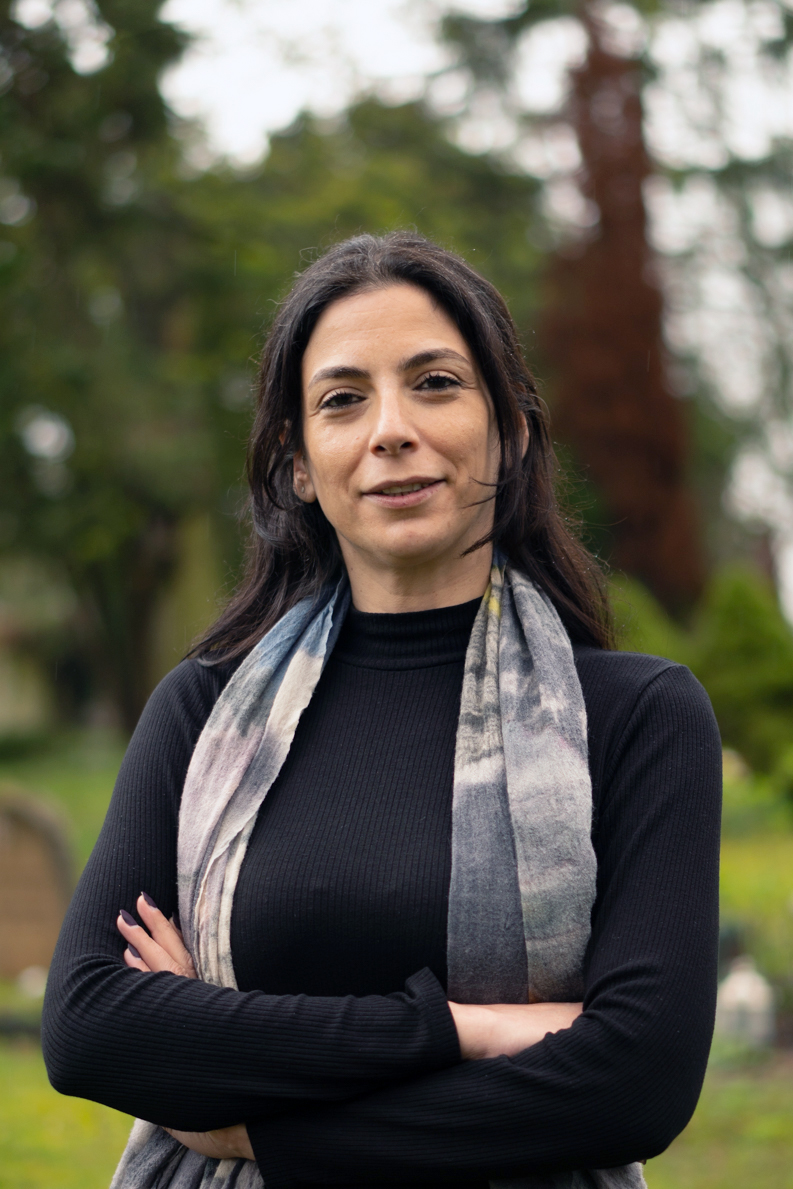
Nour Tawil
Architect / Scientist, Center for Environmental Neuroscience, Max Planck Institute for Human Development
Connects research and methods from environmental psychology and neuroscience to real-world design. Co-leading the ANFA x DIALOG workshop series.

Susan Carter
Designer / Partner at DIALOG, Doctor of Design (Candidate)
Connects science to practice in the design of large-scale mixed-use developments. Co-leading the ANFA x DIALOG workshop series.
Got questions?
Feel free to reach out.